Flop! Exhibit of Failures
We went to a temporary exhibit at the Musée des Arts et Métiers called Flops?! It’s tucked inside the main museum on Rue Réaumur in Paris, a place usually devoted to scientific instruments, engines, and elegant diagrams of progress. For €12, the ticket grants access to both the temporary exhibit and the permanent collection.
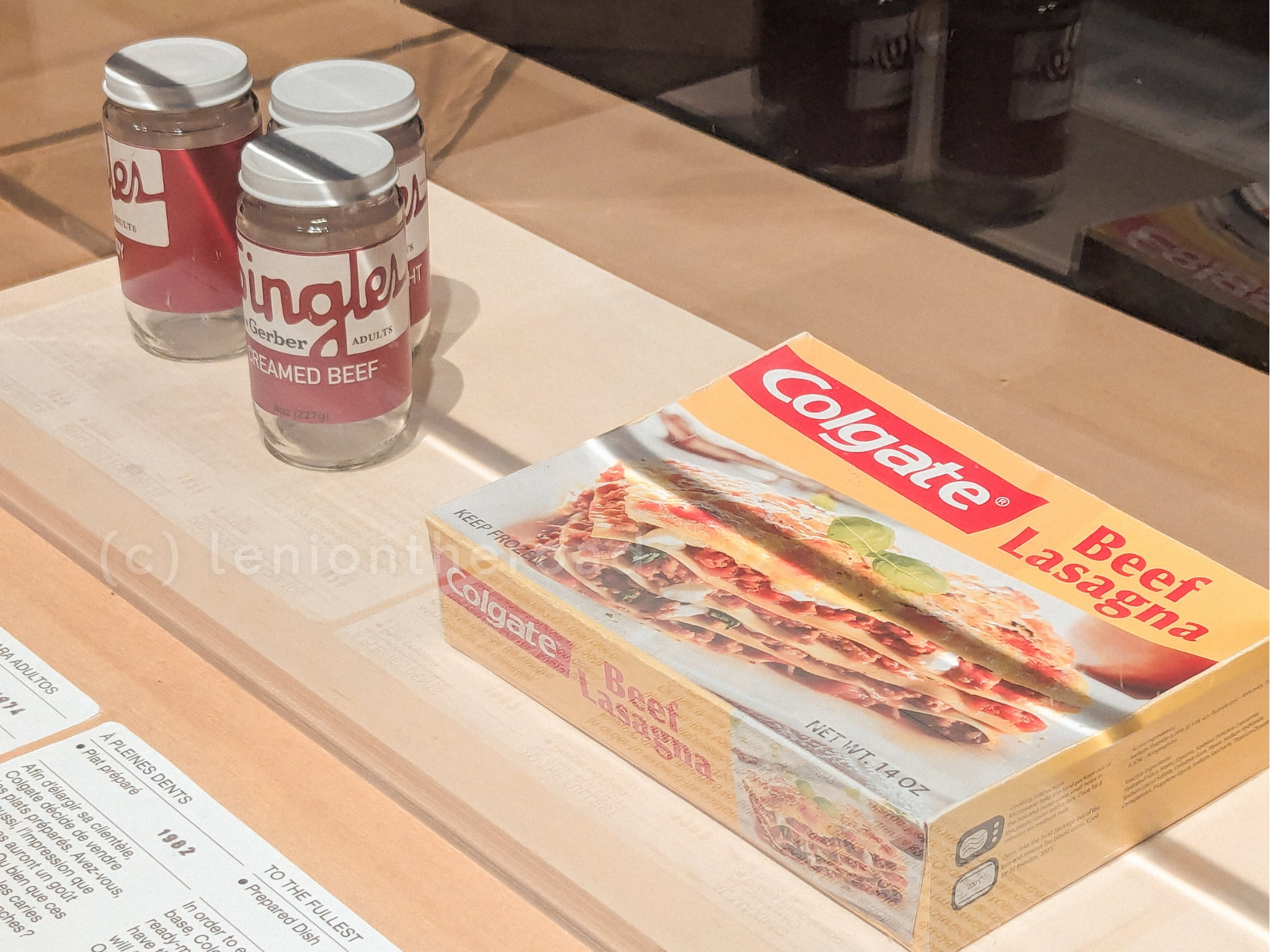
Brand identity and consistency
The exhibit’s premise is simple and strangely generous. It collects innovations that failed commercially, culturally, or technically, and places them on display without mockery. These are not trophies of ridicule but proof of effort.
The staging is raw, almost intentionally unfinished. Objects sit in cartons, like recently delivered goods awaiting shelving. Labels and multimedia captions appear first in French, then English, then Spanish. The lighting darkens as you move deeper into mostly black walls, a narrow path, a sense of descending into a tunnel of misjudgment.
The first section introduces famous flops: inventions recognizable enough to feel familiar. Then the curatorial logic becomes more interesting. Some designs failed because they were dangerous, without regard to functionality, or simply put, poorly conceived. Others failed because the world around them wasn’t ready. Still others were sound ideas that arrived too early, only to reappear decades later in more successful forms, when technology and habits finally caught up.
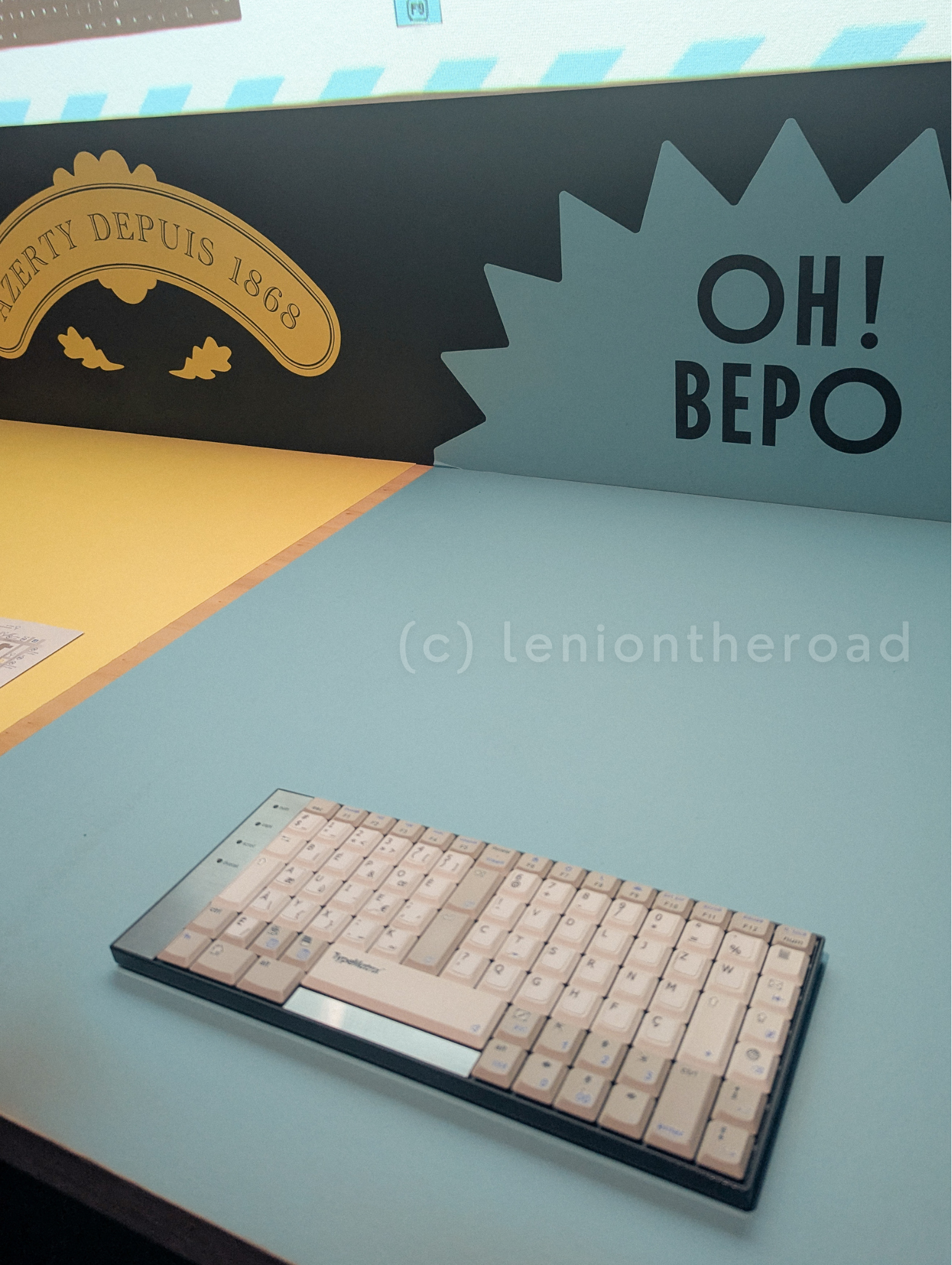
Bepo Keyboard, designed to put vowels on the left, reducing muscle fatigue
What surprised me most was how many failures had nothing to do with engineering and everything to do with people. Some designs clashed with cultural norms. Some were internally contradictory. And some, like attempts to redesign computer keyboards, ran headlong into human stubbornness.
One notable example I engaged with most was computer keyboards. There are multiple prototypes of “better” keyboards; more ergonomic, more logical. The exhibit lets you try one, pitting the French AZERTY (I scored 166 wpm vs. a supposedly more ergonomic BEPO keyboard (vastly less than I could). I sat down to type and immediately felt unsteady, as if my fingers had been reassigned without warning. My speed collapsed.
The exhibit explains why: “The cost of relearning and retooling is higher than the discomfort of a system that, while imperfect, still provides the requested service.”
We don’t keep bad designs because they’re good. We keep them because we’re used to them. Habit becomes infrastructure.
Toward the end, the exhibit shifts tone. It shows ideas that once failed but later succeeded. Technologies that are so ordinary now that we forget their experimental phase. Failure here looks less like an ending and more like a rough draft.
Just before the exit, four speculative ideas are presented. Visitors are asked to vote: future top [idea], or future flop? It’s a small gesture, but it turns the visitor into a judge of tomorrow’s mistakes.

Wait two minutes? Flop!
My own takeaways were modest and simple:
You have to try several times before something works. To fail is to have attempted. And the only way to never fail is never to take risks at all.
It was a gentle way to revisit my own relationship with failure. I appreciate how this exhibit honors failures - the effort and intention behind them, and does not shame them.
Less than two hours is enough to see the entire exhibit. After that, the brain starts quietly refusing more input. But maybe that’s just me and my growling stomach.
Because the ticket also gives access to the permanent collection, we drifted through it rather than studying it. On another day, I would want to linger over its sections on scientific instruments, materials, construction, communication, energy, mechanics, and transport.
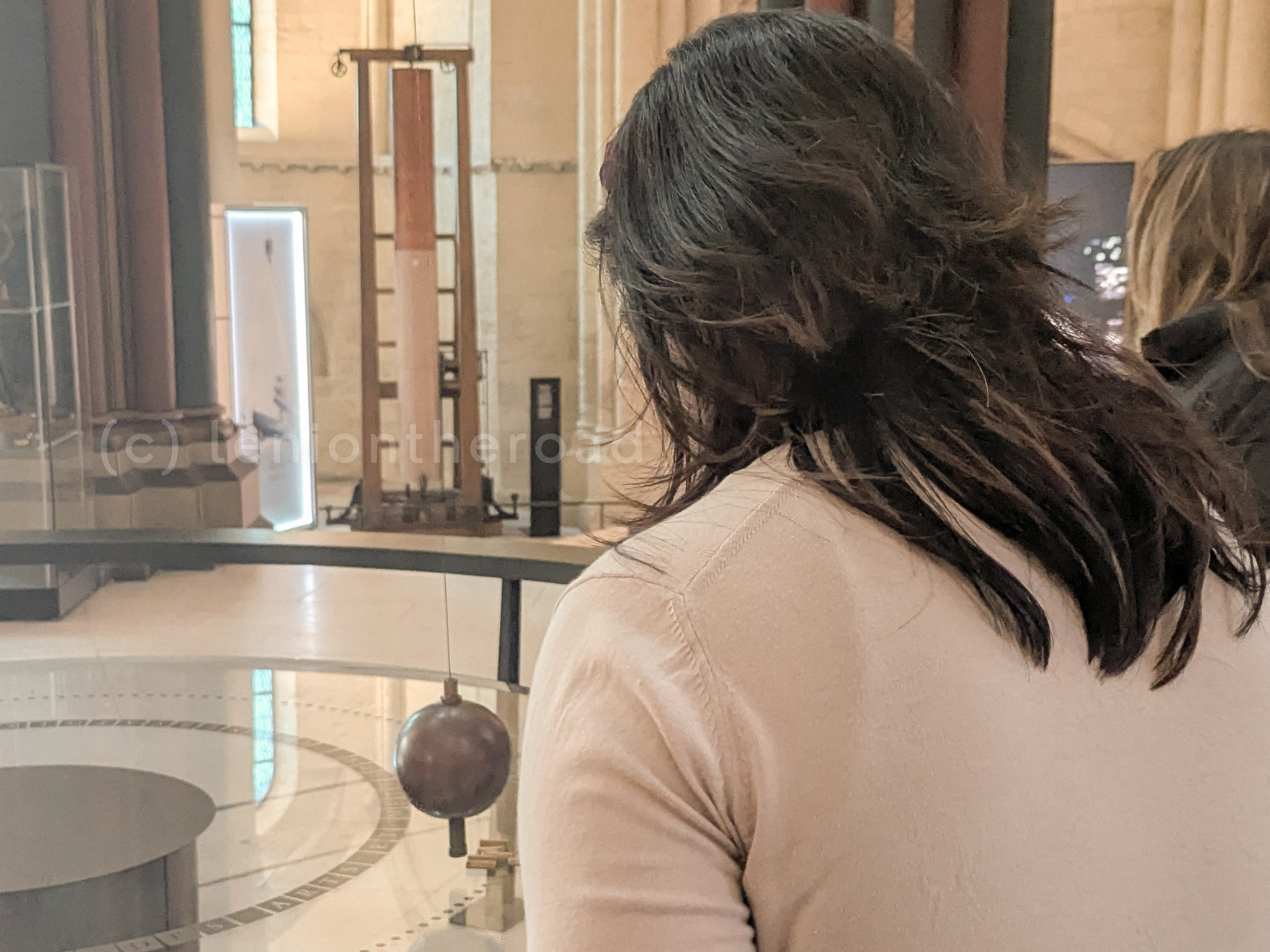
Wait for hours and it will swing the other direction
The museum also houses Foucault’s pendulum, installed under the church-like nave of the building. In 1851, Léon Foucault used a pendulum like this to demonstrate that the Earth rotates beneath it. It’s a simple experiment that made planetary motion visible to the human eye.
Nearby stands the mechanical horse used in the 2024 Olympic opening ceremony, an object already halfway between artifact and memory, so quickly! The Paris Olympics 2024 felt like it happened last month, but it’ll be almost two years now.
What stayed with me wasn’t a single object, but the idea that progress is not a straight line of smart decisions. It’s a pile of wrong ones, stacked carefully enough that something useful eventually emerges.