When in Paris: Musee de la Poste
Paris is famous for its grand museums, but some of its most rewarding cultural experiences happen far from the crowds. On the first Sunday of the month, when museums across France offer free entry, I wandered into the Musée de la Poste (French Post Office Museum), and stayed far longer than I thought I would.
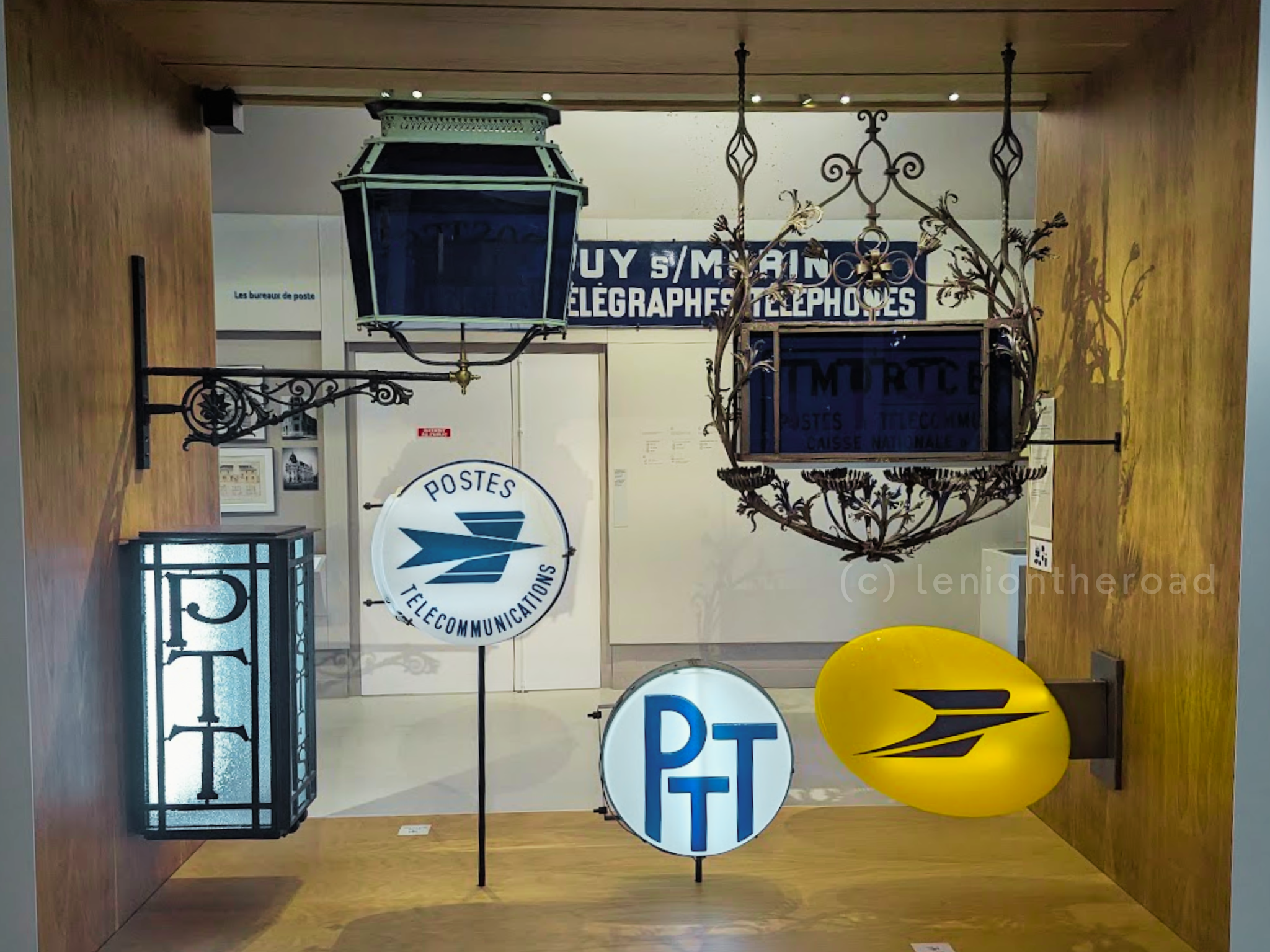
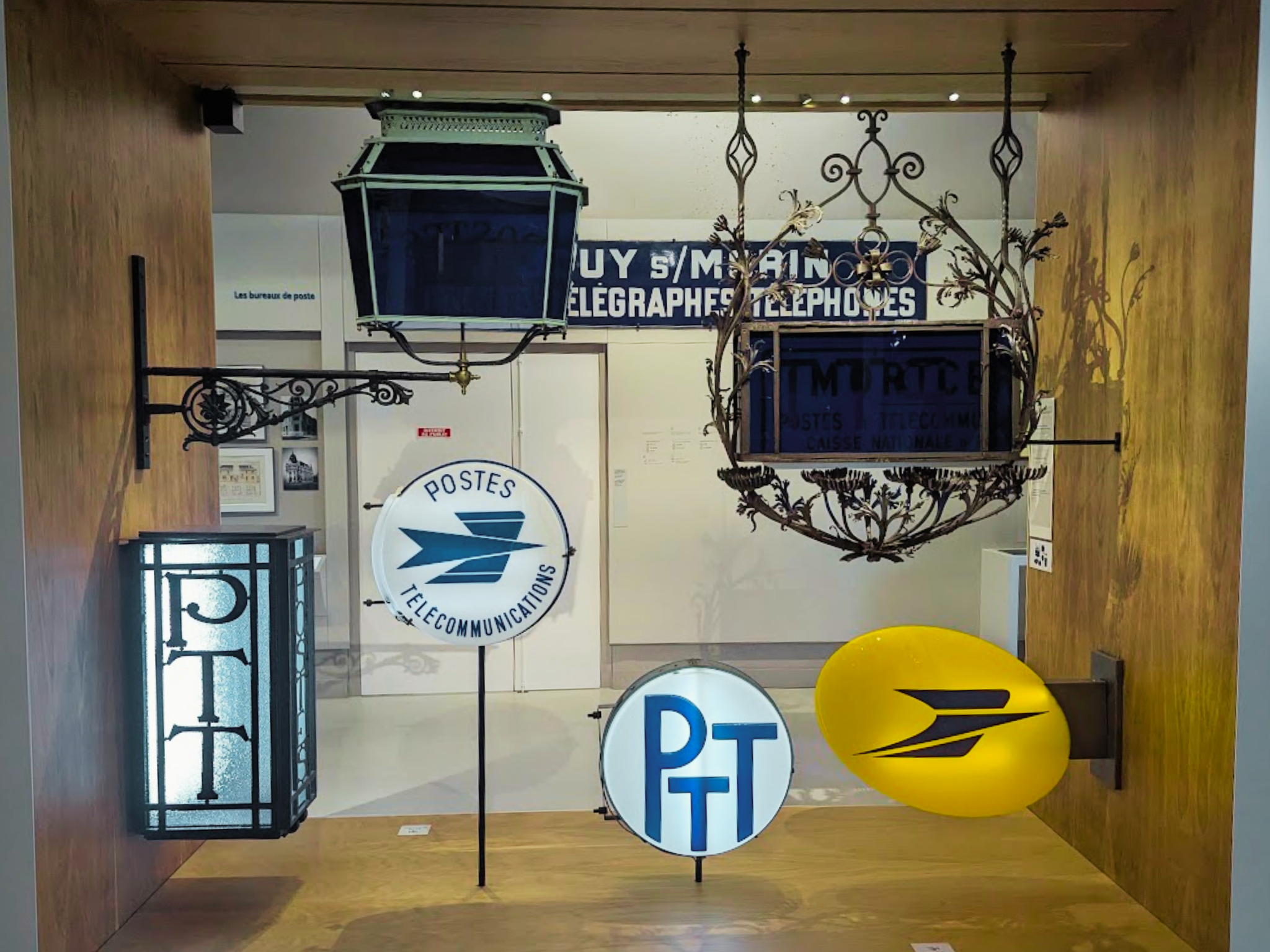
Different La Poste logos over time
If you’re looking for a less touristy thing to do in Paris, especially on a random free day, this modern and surprisingly philosophical museum deserves a spot on your list.
Visiting the Musée de la Poste
What to Know Before You Go:
Free admission on the first Sunday of every month
€11 entry on all other days
Located near Montparnasse at 34 Boulevard de Vaugirard 75015 Paris, just right in front of the Montparnasse Train Station
Allow 2–3 hours (or more if you enjoy reading exhibitions)
The museum is modern, sleek, interactive, and thoughtfully curated, but it is also very text-heavy and largely in French. While multimedia elements help bring the story to life, the experience favors readers, thinkers, and anyone happy to slow down and absorb information the very French way.
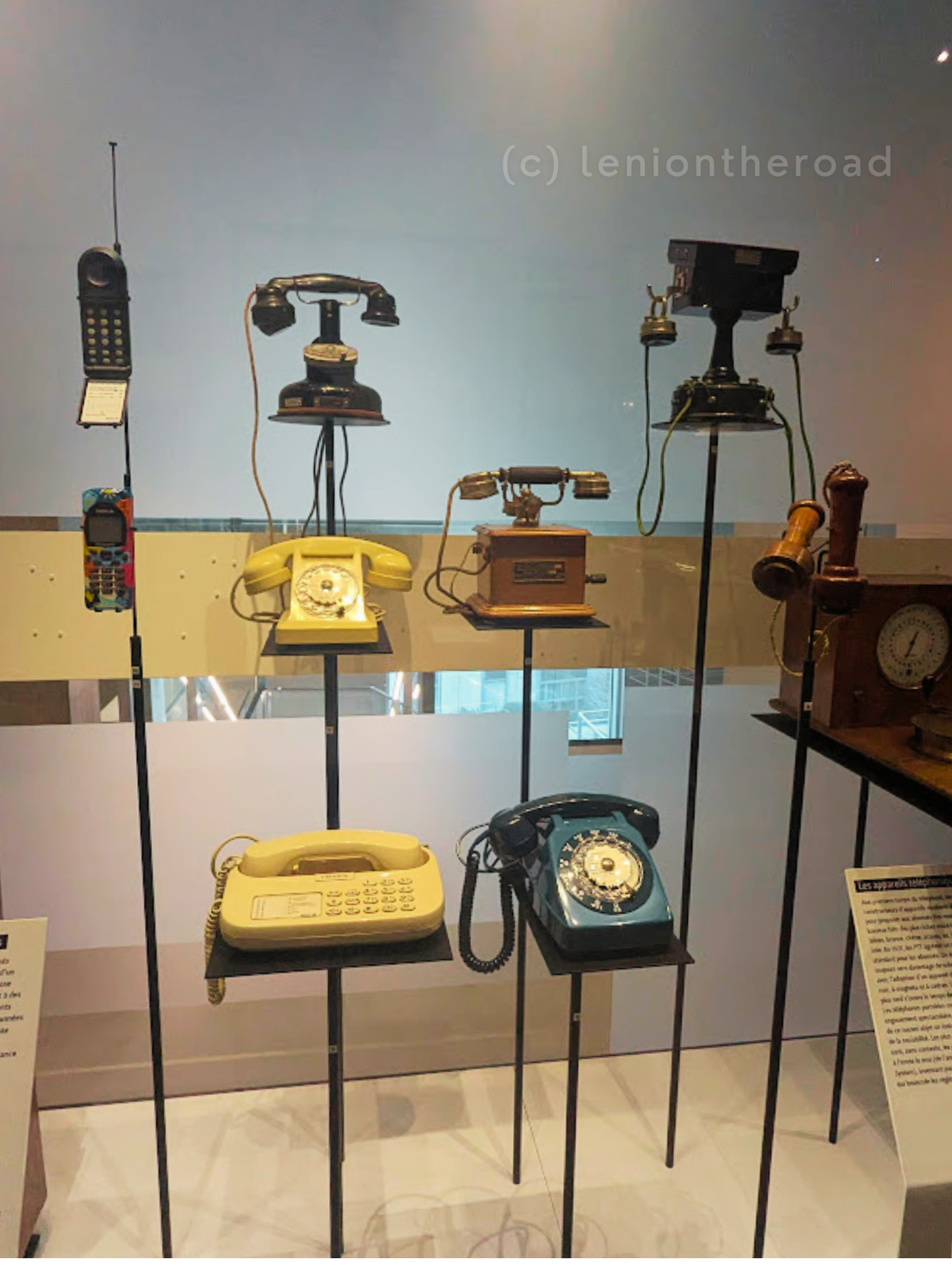
The French postal service evolved into a major telecommunications institution
A Museum That Starts at the Top
…and works its way down. The visit unfolds across four floors, beginning on the fourth floor and descending through time.
The Fourth Floor: The Origins of Communication
At the top, you’re introduced to the history of postal services: how societies first attempted to organize communication across distance. What becomes clear almost immediately is that the postal system isn’t just about letters, but about power, geography, and social order.
Something as ordinary as sending a message turns out to have always been deeply political and profoundly human.
This is also where the museum broadens its scope beyond mail. The French postal service evolved into a major telecommunications institution, managing:
Telegraph networks
Telephone lines
These services eventually separated from the postal system, becoming France Télécom, now known as Orange. It’s a powerful reminder that today’s instant connectivity evolved from slow, methodical systems built long before smartphones existed.
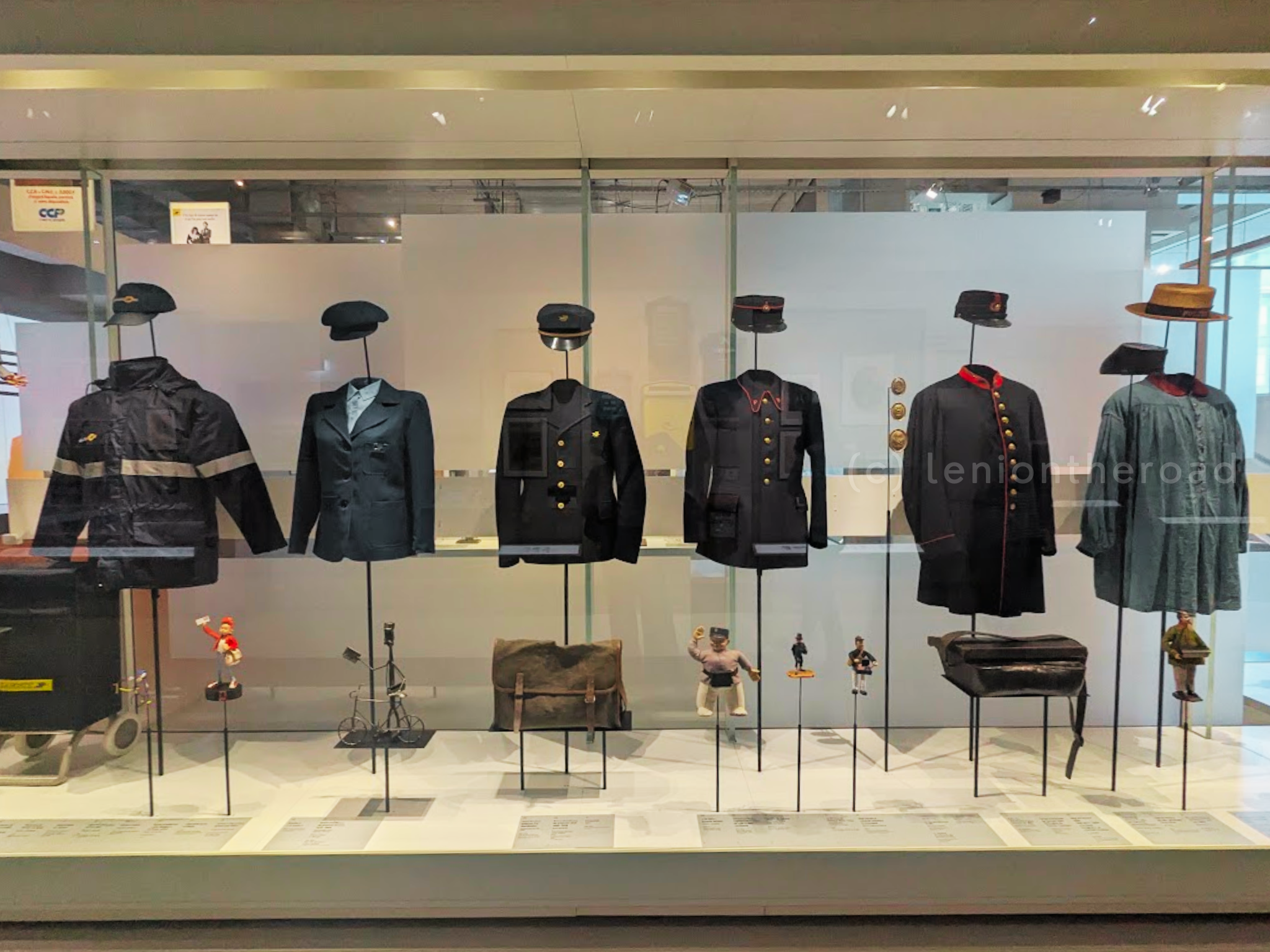
Postman uniforms
The Third Floor: The People Who Made It Possible
On the next level, the focus shifts from systems to people. Here, the story of the post is told through:
Uniforms and tools
Transportation methods
The everyday lives of postal workers
There’s also a touching homage to Antoine de Saint-Exupéry, highlighting the crucial role aviation played in mail delivery. For anyone interested in travel, transport, history, and communication, the first two top floors are a standout.
You’ll learn that messages once traveled via:
Carrier pigeons
Hot air balloons
Even letters cast into the Seine, retrieved downstream by designated collectors
It’s astonishing how much creativity and coordination went into staying connected.
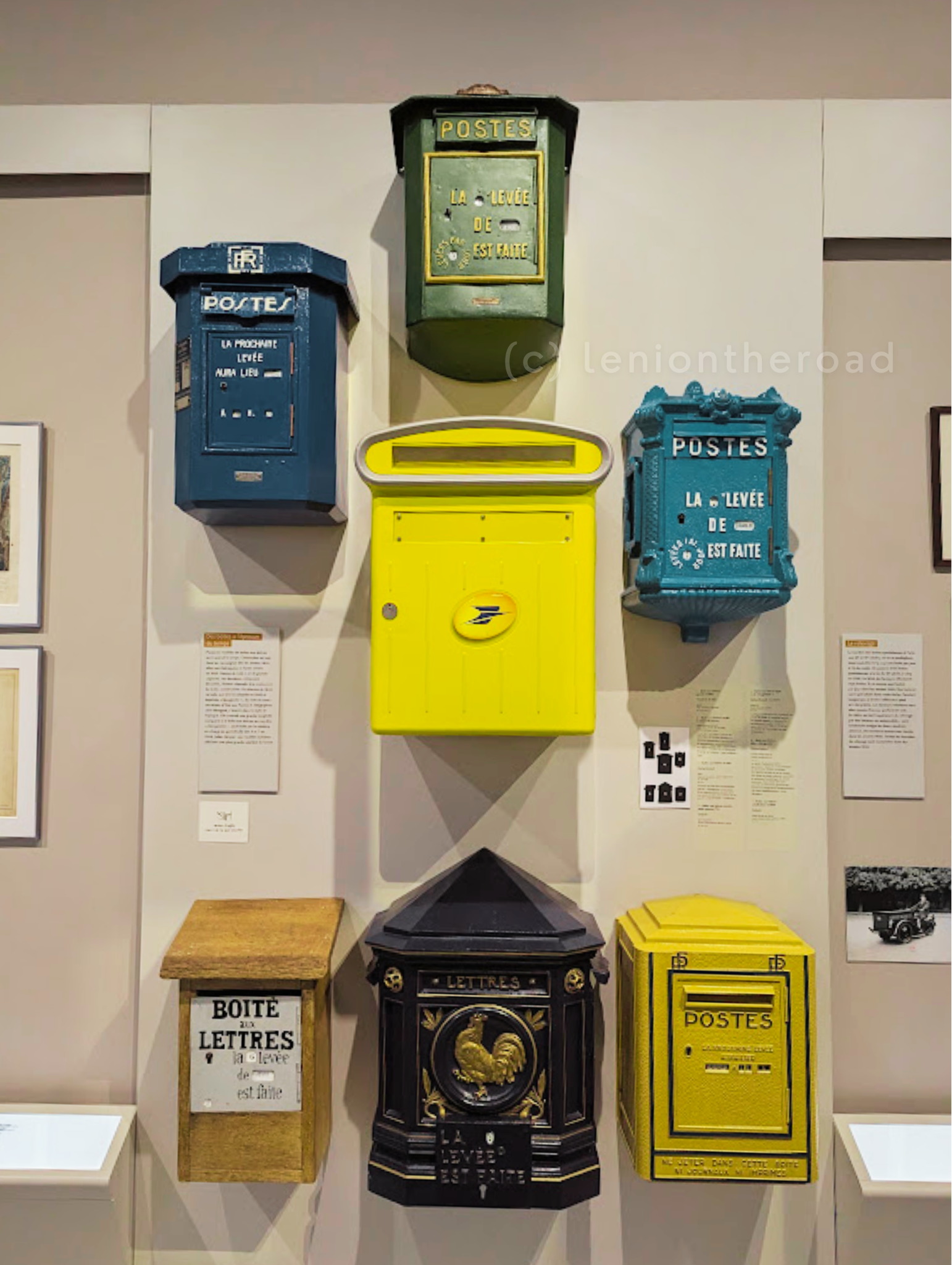
The Second Floor: A World Told Through Stamps
Then comes the extensive, beautifully displayed, and unexpectedly captivating stamp collection. Alongside the stamps, you’ll find:
Mail sacks used to group letters
Mailboxes from around the world
Insight into how nations express identity through postal design
This floor also highlights another lesser-known role of the postal service: banking. The French post developed a financial system designed to be accessible to everyone, a service that still exists today. Long before digital banking, the post office was already serving as a bridge between citizens and essential services.
By this point, I’d already spent hours inside, and only hunger pulled me away.
There’s a small boutique on the first floor where you can purchase different La Poste goodies, but also postcards, books, toys, and of course - stamps!
The Ground Floor: Temporary Exhibits
On the ground floor, the museum hosts temporary exhibitions. During my visit, the theme was about time called La fabrique du temps, and it was far more compelling than it sounds.
One revelation stood out: the postal system helped standardize time, much like the railway did. Coordinated deliveries required synchronized schedules, shaping how societies learned to agree on what time even was.
The exhibit explores time and how it’s represented (sundials, clocks, watches), how it’s regulated, as a technical necessity and a social construct, reminding us how arbitrary and influential it remains.
Why the Musée de la Poste Feels Especially Relevant Today
The Musée de la Poste honors an industry we often overlook, especially in an age where staying connected is effortless and immediate. It invites you to remember a time when communicating with someone just a few kilometers away was impossible unless you crossed paths.
A visit a this museum was surprisingly a meditation on human connection, patience, and the systems that quietly shaped modern life.
If you’re in Paris with time to spare, especially on a free museum Sunday, and want something thoughtful, educational, and refreshingly uncrowded, the Musée de la Poste offers one of the city’s most underrated cultural experiences.

At a temporary exhibit in Paris devoted to technological “flops,” I found myself rethinking failure, not really as embarrassment, but as evidence of trying. The Flops Exhibit at the Musée des Arts et Métiers reveals how bad ideas, early ideas, and stubborn habits shape the world we live in.